

Indonesia is currently experiencing a transformative shift in its tourism landscape, with wellness tourism emerging as a powerhouse sector that is reshaping how the archipelago nation positions itself on the global stage. As of 2026, the country’s strategic focus on developing high-quality, globally competitive wellness tourism has positioned it as one of the most promising destinations for travelers seeking health, rejuvenation, and meaningful experiences. This comprehensive exploration delves into the remarkable growth of Indonesia’s wellness tourism sector, the government’s strategic initiatives, the integration of traditional healing practices with modern approaches, and the immense economic potential that this flourishing industry represents.
The Strategic Government Push for Wellness Tourism
The Indonesian government has made wellness tourism a cornerstone of its national tourism development strategy. Under the leadership of Tourism Minister Widiyanti Putri Wardhana, the country has designated wellness tourism as a priority in developing quality tourism offerings that can compete on the international stage. This strategic decision reflects a profound understanding of evolving traveler preferences and the growing global appetite for experiences that go beyond traditional sightseeing.
At a press conference in Jakarta, Minister Wardhana articulated the government’s vision, emphasizing that tourism is no longer merely about which destinations people visit, but about the desire to gain more meaningful experiences. This philosophical shift aligns perfectly with the wellness tourism ethos, which prioritizes personal transformation, authentic connections, and holistic well-being over passive consumption of tourist attractions.
The government’s commitment is further demonstrated through the launch of the “Wonderful Indonesia Wellness” program, a month-long initiative scheduled for November 2026 that unites two major regional wellness festivals. The Royal Surakarta Wellness Festival features culturally immersive activities including Javanese Wisdom Immersion, Gending for Therapy, Royal Dance Symphony, A Holy Journey, and Javanese Secret Recipe. Meanwhile, the Jogja Cultural Wellness Festival offers wellness sessions such as Healthy Food and Herbals, Eco-Friendly Living, Spiritual Wellness and Energy Healing, Natural Beauty, Family and Inner Child, and Harmony in Wellness.
Yogyakarta: The Cultural Heart of Wellness Tourism
Yogyakarta, long celebrated for its rich cultural heritage and traditional arts, has emerged as a defining hub for wellness tourism in Indonesia. The region has experienced a notable transformation over the past three to four years, with wellness tourism becoming a distinct trend that draws both domestic and international visitors seeking holistic travel experiences.
What makes Yogyakarta particularly compelling as a wellness destination is its ability to seamlessly weave together cultural discovery with activities that nourish the body and calm the mind. Visitors can explore the magnificent Borobudur and Prambanan temples, immerse themselves in the Sultan’s Palace, and then transition to traditional wellness practices that have been passed down through generations.
The wellness offerings in Yogyakarta span a remarkable range of experiences that blend traditional Javanese practices with modern health-focused travel trends. These include traditional wellness treatments featuring jamu herbal tonics, traditional body scrubs, and Javanese massage therapies drawing on centuries-old healing techniques. Mindful retreats and yoga sessions set against scenic rural surroundings offer ideal settings for meditation classes and mindfulness workshops that help visitors disconnect from stress and reconnect with themselves.
Cultural wellness experiences such as gamelan music sessions, said to invoke emotional calm, and batik workshops that encourage creative expression and mental focus, provide unique pathways to well-being. Nature-based wellbeing activities, from quiet walks through rice terraces to contemplative evenings under star-filled skies, complete the wellness journey.
The rise of wellness tourism in Yogyakarta reflects a broader tourism strategy that emphasizes quality over quantity, encouraging longer stays, deeper engagement with local culture, and more meaningful interactions with place and community. This approach not only enriches the visitor experience but also spreads the benefits of tourism more equitably throughout the region by highlighting village retreats, holistic healing centers, and nature-based activities.
Economic Potential and Global Market Projections
The economic potential of wellness tourism is staggering. According to the Global Wellness Institute, the global wellness economy reached US$6.8 trillion in 2024 and is projected to grow to US$9.75 trillion by 2029. More specifically, the economic value of wellness tourism is estimated to reach US$1.08 trillion in 2026 and is projected to increase to US$2.4 trillion by 2035. The medical tourism market is expected to grow from US$38.6 billion in 2026 to US$126.2 billion by 2035.
For Indonesia specifically, the numbers are equally impressive. Global Wellness Institute data highlights that Indonesia is the largest wellness economy in Southeast Asia, with a value reaching US$55.77 billion. A 2025 Nielsen survey found that 86 percent of Indonesians are proactively maintaining their health, which exceeds the global average and positions the country to become a leading regional destination for sports and wellness tourism.
The Bali Wellness and Beauty Expo 2026 served as a powerful showcase for Indonesia’s ambitions in wellness tourism and sustainable travel. The three-day event brought together more than 140 wellness and beauty brands from 90 national and international exhibitors, representing a 35 percent increase from the previous edition. Deputy Minister of Tourism Ni Luh Puspa emphasized that wellness tourism has become a key pillar of Indonesia’s tourism diversification strategy, aimed at attracting quality visitors who stay longer and spend more, generating greater economic benefits for local communities.
The Technology Counter-Trend and Demand for Authenticity

A fascinating aspect of wellness tourism’s growth is its relationship with technology. As Artificial Intelligence (AI) technology becomes increasingly integrated into everyday life, a powerful counter-trend is emerging where people crave authentic, emotionally resonant travel experiences, genuine human interactions, and destinations that leave a lasting impression. Minister Wardhana captured this phenomenon succinctly: “Extreme AI is creating extreme analog”.
This trend reflects a broader societal shift where experiences are becoming more valuable than possessions, human relationships are more valued than mere convenience, and time spent away from the digital world is considered a luxury. Travelers, particularly millennials and Gen Z, are increasingly motivated not just to visit destinations but to obtain new experiences, attend events, and enjoy sports and wellness activities.
The post-pandemic acceleration of this trend has further boosted demand for experiences that promote physical, mental, emotional, social, and spiritual well-being. The data supports this observation, with Indonesia recording 4.68 million international tourist arrivals from January to April 2026, up approximately 8 percent from the same period last year, with wellness being one of the fastest-growing and most resilient segments.
Integrating Traditional Wisdom with Modern Healthcare
One of Indonesia’s unique advantages in the wellness tourism sector is its rich tradition of herbal medicine and natural healing practices. The government has recognized this potential and is taking concrete steps to integrate traditional wisdom with modern healthcare infrastructure.
The Food and Drug Monitoring Agency (BPOM) and the Ministry of Tourism have joined forces to develop wellness and medical tourism, optimizing the economic potential of Indonesia’s health and tourism industries. BPOM Head Taruna Ikrar has emphasized that health tourism has significant potential to become a driver of national economic growth.
In a strategic move to support medical tourism, BPOM provides special access to certain drugs through the Special Access Scheme (SAS), which allows the import of medicinal products, ingredients, cosmetics, and health supplements not yet licensed for distribution in Indonesia. This facility supports international-standard hospital services in Bali and other regions. Since June 2025, BPOM has issued 19 SAS approvals for various healthcare needs, including anticancer drugs and immunoglobulins.
The focus extends beyond medical facilities to the grassroots level, where approximately 6,261 tourist villages have been identified for development. These villages, ranging from pioneering stages to fully independent status, are not only nature- and culture-based destinations but also centers for the production of herbal medicines, herbs, and local foods. BPOM is ready to provide assistance to ensure these products meet safety, quality, and efficacy standards, thereby improving community welfare.
Minister Wardhana has highlighted that Indonesia can combine the excellence of traditional herbal medicine inherited from ancestors with modern medical facilities, all supported by the natural beauty of the archipelago. This integrated approach positions Indonesia uniquely in the global wellness tourism market, offering visitors both traditional healing experiences and world-class medical care.
Private Sector Innovation: Batam View Beach Resort and Beyond
The private sector is responding enthusiastically to the wellness tourism opportunity. Batam View Beach Resort, for instance, launched its inaugural Yang Sidjih Wellness Retreat, marking the resort’s first structured retreat designed to showcase its new Sidjih Wellness Village. The property, previously recognized among Indonesia’s top 20 green resorts by the Ministry of Tourism, has developed a comprehensive wellness offering that extends beyond traditional massage treatments to include sound healing, yoga, exercise programs, facials, reflexology, and cooking classes featuring ingredients from the resort’s organic farm.
The resort’s business model is twofold, operating its own wellness programs while also making facilities available to international yoga instructors and wellness groups seeking to run retreats at the property. This approach reflects growing demand from nearby markets such as Singapore and Malaysia, where “high-speed” societies are increasingly seeking rejuvenation opportunities in nearby destinations.
The holistic wellness retreat market in Indonesia offers diverse experiences catering to various preferences and budgets. Typical retreats feature gentle morning practices such as meditation, breathwork, or mindful movement; spa and bodywork sessions, often including massage as a central part of the experience; optional sound healing, relaxation rituals, or restorative workshops; nourishing meals with a focus on hydration, balance, and easy digestion; and plenty of downtime for rest, journaling, reading, or nature immersion.
Key Wellness Tourism Offerings
The wellness tourism offerings in Indonesia can be categorized into several distinct types:
A. Traditional Healing and Herbal Medicine: Visitors can experience jamu (herbal tonics), traditional body scrubs, and Javanese massage therapies drawing on centuries-old healing techniques. The Jamu tradition represents Indonesia’s indigenous wellness heritage and has become a major attraction for health-conscious travelers.
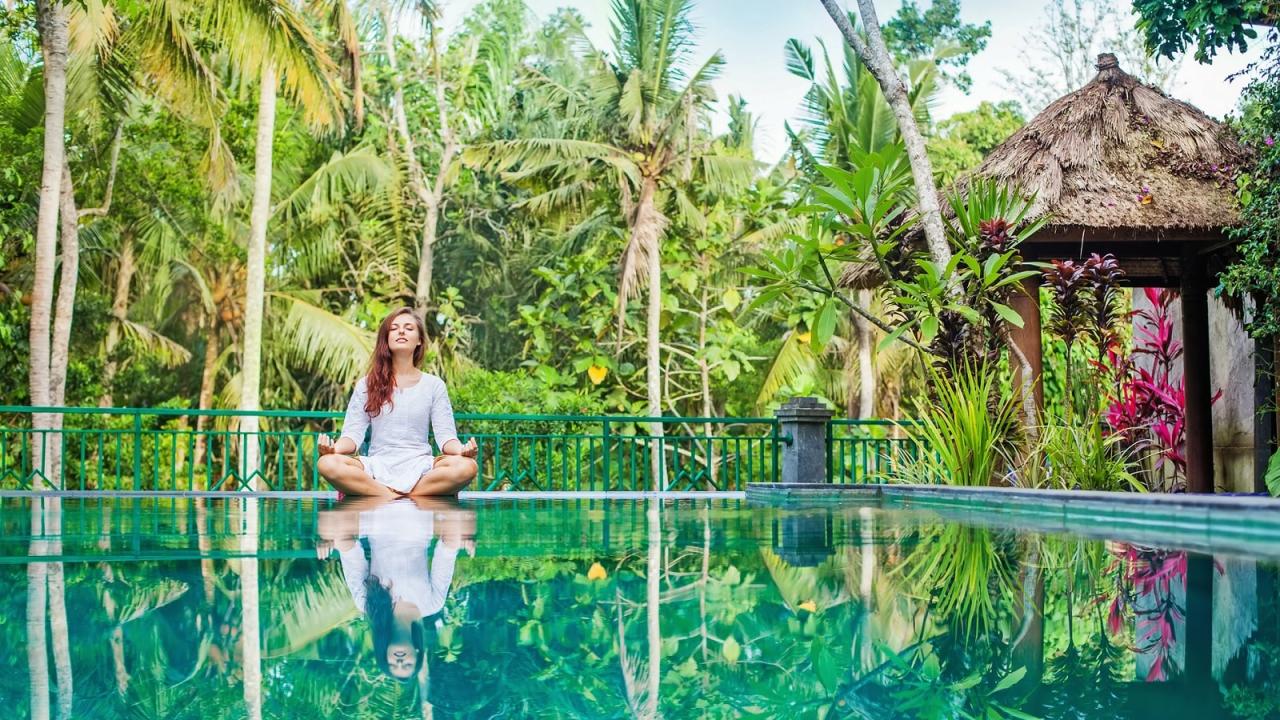
B. Mindfulness and Spiritual Retreats: Yoga sessions, meditation classes, and mindfulness workshops are offered in scenic rural surroundings, providing ideal settings for visitors to disconnect from stress and reconnect with themselves. Spiritual wellness and energy healing sessions are also available.
C. Cultural Wellness Experiences: Activities such as gamelan music sessions, batik workshops, and traditional dance performances provide creative expression and mental focus while offering cultural immersion.
D. Nature-Based Wellbeing: From quiet walks through rice terraces to contemplative evenings under star-filled skies, Indonesia’s natural environment provides a peaceful backdrop for restorative travel. Eco-friendly living sessions teach sustainable practices.
E. Medical Tourism: International-standard hospitals in Bali and other regions offer modern healthcare services, supported by special access to certain medicines and treatments.
F. Fitness and Sports Tourism: The integration of sports, tourism, and healthy lifestyles is being actively promoted through various events combining physical activities with travel experiences.
G. Holistic Wellness Retreats: Comprehensive programs combining spa treatments, bodywork, sound healing, and nourishing meals in a supportive environment that encourages recovery without pressure.
H. Beauty and Spa Wellness: The Bali Wellness and Beauty Expo highlights Indonesia’s growing capabilities in beauty and spa services, attracting both domestic and international visitors.
Destination Spotlight: Why Indonesia Works for Wellness Travelers
Indonesia’s appeal as a wellness destination extends beyond specific activities to its overall environment and atmosphere. The warm weather and tropical greenery create a naturally unhurried daily rhythm that encourages visitors to slow down and rest. The strong spa culture and availability of budget-friendly wellness options alongside luxury retreats make it accessible to a wide range of travelers.
Bali remains the classic wellness base, particularly Ubud, where the atmosphere is calm, reflective, and practice-friendly. However, other regions are emerging with distinct offerings. Areas such as Canggu attract travelers who want beach access, cafés, bodywork, and flexible wellness options without a highly inward or secluded retreat style. The diversity of experiences ensures that Indonesia works for travelers seeking relaxation, body-based therapies, and destinations where the environment itself supports nervous-system recovery.
The climate is consistently warm year-round, making Indonesia appealing for travelers who want a wellness break in a tropical setting. The drier periods are ideal for comfortable outdoor sessions, while wetter months offer greener landscapes, quieter properties, and a naturally slower atmosphere suited to spa time and indoor practices.
Challenges and Opportunities Ahead
While Indonesia’s wellness tourism sector is booming, several challenges remain. Quality assurance and standardization across the vast archipelago require ongoing attention. The government is addressing this through certification programs, training initiatives, and regulatory frameworks that ensure safety and quality standards are met.
The integration of traditional medicine with modern healthcare requires careful navigation of regulatory frameworks and patient safety protocols. BPOM’s role in supervising and providing special access to medicines while ensuring safety and quality standards reflects the government’s balanced approach to this challenge.
Infrastructure development is another priority, with the tourism ministry working to improve connectivity to wellness destinations and develop facilities that meet international standards. The focus on tourist villages as centers for herbal medicine production represents a grassroots approach to infrastructure development that benefits local communities.
The Role of Collaboration
The success of Indonesia’s wellness tourism development depends on close collaboration among the government, businesses, communities, and all stakeholders. Minister Wardhana emphasized that this collaborative approach is essential for achieving the sector’s potential. The launch of the Indonesia Wellness and Beauty Entrepreneur Association (IWBEA) during the Bali Wellness and Beauty Expo represents a concrete step toward strengthening collaboration among stakeholders and accelerating the development of a globally competitive wellness and beauty industry.
Future Outlook
The outlook for Indonesia’s wellness tourism sector is exceptionally bright. With projected growth in the global wellness economy reaching US$9.75 trillion by 2029, Indonesia is well-positioned to capture a significant share of this market. The country’s unique combination of cultural heritage, natural beauty, traditional healing practices, and modern healthcare facilities provides a comprehensive wellness tourism offering that few destinations can match.
As the demand for authentic, meaningful travel experiences continues to grow, Indonesia’s strategic focus on quality wellness tourism is likely to yield substantial economic benefits while promoting sustainable tourism development. The integration of traditional Javanese wisdom with modern wellness practices, the development of tourist villages as centers for herbal medicine production, and the expansion of medical tourism facilities all contribute to a comprehensive wellness ecosystem.
For travelers, Indonesia offers an unparalleled opportunity to embark on a journey of healing, rejuvenation, and self-discovery. Whether through the ancient wisdom of Javanese healing traditions, the serene landscapes of rural retreats, or the modern comforts of world-class medical facilities, Indonesia’s wellness tourism sector promises experiences that nourish the body, calm the mind, and enrich the soul.
The year 2026 marks a pivotal moment for Indonesia’s wellness tourism sector. Through strategic government initiatives, private sector innovation, and community engagement, the country is transforming its tourism industry to meet the evolving needs of travelers worldwide. As the world becomes increasingly digital and fast-paced, Indonesia offers the perfect antidote: a return to authentic experiences, human connection, and holistic well-being in one of the most beautiful settings on Earth.