

The world of interior design is experiencing a fascinating renaissance. After years dominated by the serene, often austere principles of minimalism and the organic curves of biophilic design, a new aesthetic is emerging that promises drama, personality, and a touch of eccentricity . This movement, identified by Pinterest as a key trend for 2026, is called Neo Deco . It represents a bold and sophisticated reinterpretation of the opulent Art Deco style of the 1920s and 1930s, tailored for the contemporary home. This revival is not about recreating a museum piece; it’s about distilling the very essence of the Jazz Age its geometry, glamour, and rich materiality and infusing it with a modern, livable sensibility.
The Defining Philosophy of Neo Deco
The core philosophy of Neo Deco lies in its modern reinterpretation. As designers and tastemakers have noted, the heavy ornamentation and theatricality of classic Art Deco are being shed in favor of a more curated and understated approach . It’s a shift from purely decorative excess to an emphasis on form, proportion, and the quality of materials.
-
A. Subtraction and Curation: Unlike its predecessor, which often celebrated maximalism, Neo Deco operates on a principle of subtraction . It cherry-picks the most iconic elements of Art Deco, like geometric shapes and luxurious materials, and deploys them with restraint. The result is a look that feels intentional and edited, rather than overwhelming .
-
B. Comfort and Livability: This new style prioritizes comfort and livability. It’s not about creating an environment that feels like a stage set from The Great Gatsby, but rather a refined, comfortable home where one can actually live and relax. It’s luxurious without feeling pretentious and relaxed without being sloppy .
-
C. A Reaction to Minimalism: The rise of Neo Deco can be seen as a direct and deliberate reaction to the cool, beige minimalism that has dominated interiors for years. It restores warmth, depth, and character to spaces, rejecting the sterile, empty surfaces in favor of layered, cozy glamour .
-
D. Architectural Focus: The style is highly architectural. It celebrates structure, symmetry, and rhythm, using design elements to create visual interest that is inherently tied to the bones of a room . This focus on structure provides a sense of stability and permanence, offering a counterbalance to fast-paced, mass-produced decor .
Key Differences Between Original Art Deco and Neo Deco
Understanding the nuances between the original Art Deco and its modern descendant is crucial to embracing the trend correctly. While both celebrate glamour and craftsmanship, their application differs significantly. The table below, drawing from design experts and reports from events like Salone del Mobile 2026, clarifies the distinction .
| Feature | Original Art Deco (1920s-30s) | Neo Deco (Contemporary) |
|---|---|---|
| Silhouettes | Strong symmetry, stepped forms, curved club chairs . | Streamlined takes—arch-shaped headboards, ribbed consoles, softer sculptural forms . |
| Ornamentation | Heavy, layered detailing, and intricate ornamentation . | Subtle, graphic gestures and a focus on form; “decoration becomes a graphic gesture” . |
| Finishes | High-gloss woods, chrome, inlaid stone, and polished brass . | A mix of matte and glossy: matte black, brushed brass, cerused wood, and honed marble . |
| Palettes | Bold, dramatic jewel tones like emerald, onyx, and burnished gold . | Softer, more earthy jewel tones (olive, tobacco, ochre) alongside deep, moody shades balanced with warm neutrals . |
| Patterns | Sunbursts, chevrons, rigid geometry, often used in a more uniform way . | Same iconic motifs, but often oversized, tone-on-tone, or used as accent “moments” for a more contemporary effect . |
| Materials | Emphasis on new, modern materials of the Machine Age: chrome, glass, lacquer . | Celebrates richness and authenticity, mixing natural materials like veined marble, warm walnut, and honed stone with high-performance surfaces . |
The Essential Elements of Neo Deco Design

To effectively bring the Neo Deco look into your home, it’s important to focus on several key elements. Design experts have broken down the style into actionable components that can be applied in any space. As shown, this is a style of curated drama and refined luxury.
1. Embrace the Dark Side
A hallmark of this new trend is a departure from the safe, light woods that have been popular in recent years. Instead, Neo Deco encourages homeowners to embrace the dark side. Rich wood tones like walnut, mahogany, and rosewood are making a significant comeback because they carry a weight and warmth that lighter finishes simply cannot replicate . This can be achieved through large pieces of furniture like dining tables, bar carts, or side tables, or even through framed artwork and ottomans. To prevent these darker elements from feeling heavy, they must be contrasted with softer textures like wool, linen, or honed stone .
2. Develop a Rich Material Profile
Art Deco has always been about material richness, but in its modern iteration, it’s also about restraint and authenticity . Instead of opting for surface-level glamour, the goal is to select a few high-quality, natural materials that create depth and visual interest . This means choosing pieces that will develop a patina over time, like unlacquered brass, or showcasing materials with distinctive movement, like heavily veined marble or rich wood grains . The deliberate combination of glossy materials like chrome and glass with matte pieces like leather and suede is crucial for creating a balanced, dynamic composition. This is also evident in the resurgence of Art Deco-inspired furniture seen at major design events .
3. Apply a Sophisticated Color Palette
Where original Art Deco often featured a full spectrum of vibrant jewel tones, Neo Deco’s color palette is more muted and controlled, designed to create a warm and calming retreat . While it is still rooted in color, the approach is more nuanced.
-
A. The Primary Palette: The foundation consists of warm, earthy tones inspired by natural materials like wood and leather. This is complemented by deep, sophisticated jewel colors like emerald green, burgundy, petrol blue, and amber orange .
-
B. The Accent Palette: Lighter shades come from materials like light marble and milky glass, while metallic accents in warm gold and brass act as sophisticated highlights .
-
C. The Strategy: The modern approach involves using color strategically. Many designers recommend “color drenching,” a technique where a single, favorite tone is carried through multiple design elements in a single space. From there, secondary colors and a few solids are layered in to create a rich, rich, but not overdone, feel .
4. Balance Geometry with Sculptural Forms
One of the most striking aspects of Neo Deco is the controlled balance between sharp geometry and soft, sculptural forms. Classic Art Deco relied heavily on sharp, angular motifs, but the modern take sees softness playing a more important role . This is achieved by always balancing a clean line with a soft curve. Examples include pairing a sleek, angular sofa with a disc-shaped throw pillow, placing a rounded, asymmetrical vase on a square table, or choosing an arch-shaped headboard to soften the rigid lines of a contemporary room . This is a departure from the purely rectilinear forms of classic Art Deco, moving toward a more organic, fluid geometry .
5. Illuminate with Intentional Lighting
Perhaps the most impactful and accessible way to achieve the Neo Deco aesthetic is through lighting. Statement lighting is not just functional but is an integral part of the design language . The goal is to create warmth and depth throughout the day and evening by layering different types of light. Think sculptural pendant lamps, architectural chandeliers, and geometric wall sconces that act almost like jewelry on the walls . These pieces often feature the signature materials of the style, such as polished brass, chrome, and opaline glass, and provide an excellent opportunity to introduce the trend’s classic geometric shapes like chevrons, fans, and arches . Swapping in a sculptural pendant lamp with brass or chrome details is one of the simplest ways to update a room .
How to Incorporate Neo Deco into Your Home
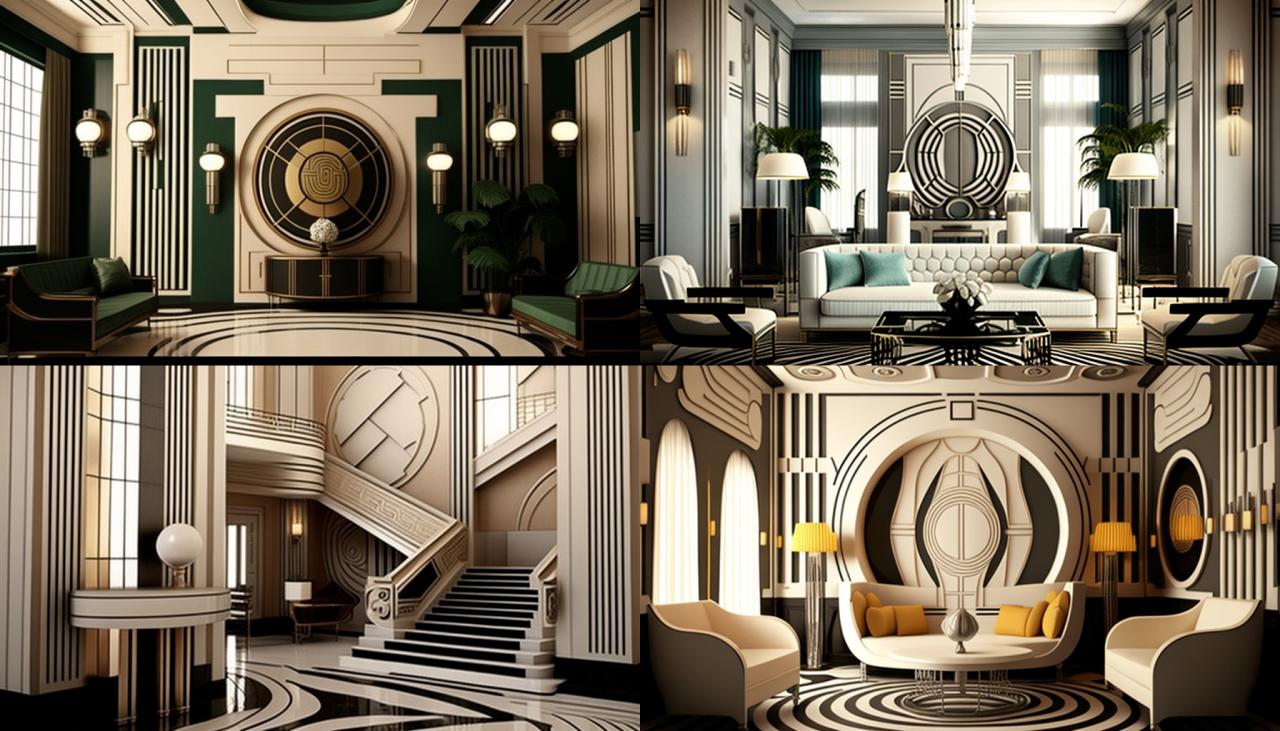
The beauty of the Neo Deco style is that it does not require a full-scale renovation to be effective. It’s about integration rather than a complete overhaul. As experts recommend, starting with a single “moment space” is a fantastic approach . Entryways, powder rooms, and bar areas are perfect for adding an extra dose of glamour. These small, high-impact spaces allow you to experiment with luxurious materials, bolder colors, and sculptural lighting without overwhelming an entire home . You could consider adding a small area of black and white geometric tile in a bathroom or a red marble top on a console table in a hallway .
Furniture and accessories are where the Neo Deco style truly shines. The focus should be on incorporating high-quality, heritage-inspired statement pieces that act as focal points, around which more modern, elegant elements are built . This ensures the space feels like a refined home rather than a museum. Look for items that demonstrate craftsmanship and have a story to tell. This can include:
-
Furniture with fluted details, channel tufting, and tapered legs .
-
Upholstery in lush fabrics such as velvet and leather, especially on sofas and armchairs, to create a sense of cozy, curated glamour .
-
Decorative objects like antique bar carts, sculptural vases, and fringed ottomans .
-
Accessories that incorporate geometric patterns, such as geometric-framed mirrors, patterned art, or crisp chevron cushions .
Ultimately, Neo Deco is a design movement that signals taste, legacy, and refinement . It is a perfect synthesis of the past and the present, creating a sophisticated, yet deeply welcoming home. The trend offers a way to express personal style by thoughtfully integrating bold moments and sculptural forms into highly personalized spaces . It is a modern, curated, and confident way to live with the glamour of the past while embracing the comfort of the present.