

In a world of endless notifications, autoplaying videos, and infinite scrolling feeds, our brains are under a constant, unprecedented siege. This digital deluge has engineered a modern crisis of attention, leaving many feeling scattered, unmotivated, and perpetually distracted. Amidst this chaos, a powerful concept has emerged from the intersection of neuroscience and behavioral psychology: the Dopamine Detox, also known as Dopamine Fasting. Far from a fleeting wellness fad, this practice offers a radical yet structured approach to reclaiming our cognitive sovereignty, rebuilding our capacity for deep work, and unlocking profound, sustainable productivity. This comprehensive guide will dissect the science, methodology, and real-world application of a Dopamine Detox, providing you with a complete blueprint to reset your brain and master your focus.
Understanding the Neurochemistry: What is Dopamine and Why Does It Need a “Detox”?
To understand the “detox,” we must first demystify dopamine itself. Popular culture often mislabels dopamine as the “pleasure chemical.” In reality, it is more accurately described as the “motivation and anticipation molecule.” Its primary role is in the brain’s reward circuitry, driving desire, craving, and the pursuit of goals. When you receive a like on social media, a new email, or a win in a game, your brain releases a small burst of dopamine. This creates a reinforcing loop: action (checking phone) -> reward (notification) -> strengthened neural pathway.
The problem in the modern environment is hyper-stimulation. Our smartphones are literal dopamine slot machines, offering unpredictable, high-frequency rewards for minimal effort. This leads to several critical issues:
A. Dopamine Desensitization: Constant exposure to high-dopamine activities (social media, junk food, binge-watching) raises our baseline threshold for pleasure. What once brought joy like reading a book or finishing a single task now feels underwhelming, pushing us toward more extreme or frequent stimulation to feel the same satisfaction.
B. Atrophy of Attention: The brain’s prefrontal cortex, responsible for executive functions like focus, decision-making, and long-term planning, is hijacked by the impulsive, reward-seeking limbic system. We become conditioned to seek quick hits of information, fragmenting our attention span.
C. The Motivation Paradox: When cheap dopamine is abundant, the motivational drive provided by dopamine for challenging, long-term goals diminishes. Why endure the arduous “dopamine drip” of writing a report when you can get a quicker spike from scrolling through TikTok?
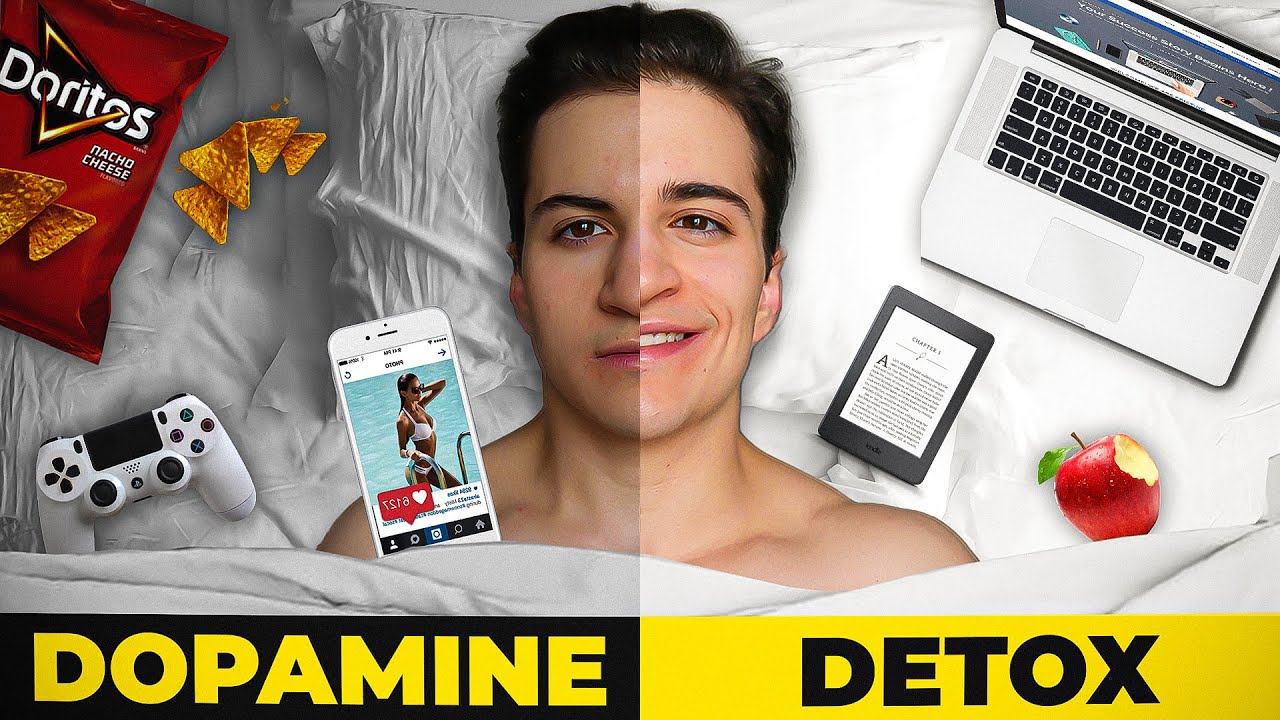
A “Dopamine Detox” is not about eliminating dopamine entirely a biological impossibility but about consciously reducing exposure to instant, artificial, and hyper-stimulating rewards. It’s a period of strategic deprivation to resensitize your brain’s reward system, allowing you to derive satisfaction from productive, meaningful, and often more effortful activities.
The Tangible Benefits: What Can a Dopamine Fast Actually Do for You?
Embarking on a structured detox promises a cascade of cognitive and psychological benefits that directly translate to enhanced productivity.
A. Sharper Focus and Lengthened Attention Span: By removing the constant pull of distractions, you train your brain to sustain attention on a single task. This rebuilds the neural pathways for deep work, allowing you to enter states of flow more readily and for longer periods.
B. Renewed Motivation for Challenging Tasks: As your dopamine receptors resensitize, the intrinsic reward from making progress on a complex project or learning a new skill becomes more potent. You begin to find genuine enjoyment in the process of creation and problem-solving.
C. Reduced Anxiety and Mental Clarity: The noise of digital life contributes significantly to background anxiety. A detox creates mental space, reducing cognitive load and the fear of missing out (FOMO). This leads to clearer thinking and better decision-making.
D. Enhanced Mindfulness and Presence: By breaking the compulsive cycle of seeking stimulation, you become more present in the real world. You notice more, engage more deeply in conversations, and appreciate simple pleasures like a walk or a meal without the urge to document it.
E. Stronger Willpower and Impulse Control: The practice of saying “no” to easy dopamine is a workout for your prefrontal cortex. Each conscious resistance strengthens your self-regulation muscles, making it easier to manage impulses in all areas of life.
F. Improved Sleep Patterns: Eliminating blue light and mentally stimulating content, especially before bed, allows your natural sleep cycle (circadian rhythm) to restore. Deeper, more restorative sleep is a foundational pillar of daily productivity.

A Structured Framework: How to Design Your Dopamine Detox Plan
A successful detox is not about white-knuckling through a day of misery. It’s a planned, intentional reset. Here is a tiered framework, from a beginner-friendly reset to an advanced challenge.
Phase 1: Preparation and Awareness (The Audit)
Before you begin, conduct a “Dopamine Audit.” For 2-3 days, track your daily activities. Note every time you engage in a high-dopamine, low-effort behavior: social media scrolling, video games, online shopping, snacking on junk food, consuming pornography, binge-watching, even compulsive news checking. This isn’t about judgment, but about creating awareness of your personal dopamine triggers.
Phase 2: The Detox Tiers – Choose Your Challenge
-
Beginner Tier (The Digital Sunset – 24 Hours): Ideal for first-timers. The core rule is the elimination of all recreational digital consumption. This means no social media, video streaming, gaming, or non-essential web browsing. Phone use is restricted to calls and essential messages. Activities allowed include: reading physical books, journaling, walking in nature, light exercise, cooking simple meals, tidying your space, and face-to-face conversation.
-
Intermediate Tier (The Sensory Reset – 48 to 72 Hours): Builds upon the Beginner Tier by adding further restrictions to heighten sensory awareness and introspection. In addition to digital rules, eliminate: processed/junk food (opt for whole foods only), caffeine, alcohol, loud or stimulating music (opt for silence or ambient sounds), and purposeless shopping. The focus shifts to engaging in “analog” activities that require gentle focus: drawing, meditation, stretching/yoga, writing with pen and paper, simple gardening, or organizing physical files.
-
Advanced Tier (The Monastic Mode – 7 Days): A profound reset for those experiencing severe burnout or distraction. This is a minimalist week. Beyond Intermediate rules, minimize all forms of external input and stimulation. Limit speech to only what is necessary. Engage in extended periods of solitude, deep reflection, and demanding physical work like cleaning, repairs, or long hikes. The goal is to force the brain to find stimulation solely in thought, observation, and basic physical tasks.
Phase 3: Protocol and Environment Design
Success depends on setting up your environment for victory before the detox starts.
A. The Digital Environment: Use app blockers (Freedom, Cold Turkey) to restrict access to tempting sites and apps. Log out of all social media accounts. Consider physically removing distracting devices from your workspace or bedroom. Charge your phone in another room.
B. The Physical Environment: Prepare your space. Have physical books, art supplies, or puzzles ready. Stock your kitchen with healthy, whole foods to avoid impulsive snacking. Create a clean, clutter-free zone to reduce visual noise.
C. The Social Environment: Inform close friends or family about your plan to manage expectations. Politely decline social invitations that center around high-stimulation activities (e.g., clubbing, all-day gaming sessions). Seek out supportive individuals who might join you.
Phase 4: During the Fast – Navigating Withdrawal and Boredom
The first 6-12 hours are often the hardest. You will likely feel restless, bored, and acutely aware of cravings. This is not failure; it is the process. The brain is signaling for its usual dopamine fixes. The key is to lean into the boredom. Neuroscientific research suggests that boredom is a crucial catalyst for creativity and self-directed thought. Do not rush to fill the silence. Sit with the discomfort. This is where the mental rewiring occurs.
Sustaining the Gains: Post-Detox Integration for Long-Term Productivity
The detox period is the reset button, but the true transformation happens in how you reintegrate stimuli. The goal is not to live like a monk forever, but to build a more intentional, disciplined relationship with technology and pleasure.
A. The Strategic Reintroduction: Do not return to your old habits all at once. After the fast, carefully reintroduce one or two digital tools at a time. Assess each for its true utility versus its mindless consumption. Ask: “Does this serve my goals or just distract me?”
B. Designing a “Dopamine Diet”: Consciously structure your day to prioritize high-effort, high-reward tasks in your peak focus periods (usually morning). Schedule specific, limited “windows” for checking email and social media (e.g., 30 minutes at 12 PM and 4 PM). Use website blockers during deep work sessions.
C. Cultivating “Slow Dopamine” Activities: Proactively fill your life with activities that provide a slow, steady release of dopamine tied to accomplishment. These are the antidotes to instant gratification. Examples include:
* Learning a new language or musical instrument.
* Regular physical exercise and tracking progress.
* Working on a creative project (writing, coding, woodworking).
* Mastering a complex professional skill.
* Building a small business or side project.
D. Implementing Periodic Mini-Detoxes: Make detox principles a regular part of your life. Consider implementing a “Digital Sabbath” every weekend (e.g., from Friday night to Saturday evening), or a 24-hour reset at the start of each month. This prevents creeping desensitization.
Addressing Common Criticisms and Misconceptions
The concept of Dopamine Fasting has drawn some criticism, often based on misunderstandings that are important to clarify.
A. “You Can’t Detox from a Neurotransmitter”: This is a semantic criticism. Experts agree the term “detox” is a metaphor for behavioral abstinence, not a literal flushing of dopamine. The core mechanism downregulation of dopamine receptors through reduced stimulation is well-supported by neuroscience.
B. “It Promotes an Unhealthy Relationship with Pleasure”: When practiced as a rigid, punishing rule, this can be true. However, the healthy interpretation is about conscious consumption, not total abstinence. It’s akin to adopting a nutritious diet while still enjoying the occasional treat, rather than swinging between binging and starvation.
C. “It’s Just a Trendy Name for Digital Minimalism or Mindfulness”: There is significant overlap. The unique contribution of the dopamine framework is that it provides a compelling biological explanation for why digital minimalism and mindfulness work. This mechanistic understanding can increase adherence for many.
Advanced Considerations: Tailoring the Detox to Your Neurotype
While the framework is broadly effective, personalization yields better results. Consider your own tendencies:
-
For the Chronically Distracted: Focus heavily on the environment design phase. Your willpower is depleted; make temptation impossible through physical and digital barriers.
-
For the Creative Stuck in a Rut: Use the detox, especially the boredom phases, as a catalyst. Keep a notebook handy. Your most original ideas will likely surface when external input is silenced.
-
For the Burned-Out Professional: The Intermediate or Advanced Tiers are crucial. Pair the detox with truly disconnecting from work email and communication. The goal is not just productivity, but neural recovery to prevent long-term exhaustion.
Conclusion: The Path to Sovereign Attention
In the economy of the 21st century, your most valuable asset is not your time, but your focused attention. Time is spent, but attention is invested. A Dopamine Detox is the strategic withdrawal of that investment from the trivial many, so it can be concentrated on the essential few. It is a deliberate, often uncomfortable, but profoundly liberating practice of taking back control of your brain’s reward pathways from engineers designed to capture them.
By undertaking this reset, you do more than just boost a day’s productivity. You initiate a fundamental recalibration of what you find meaningful and rewarding. You rebuild the capacity to engage deeply with the real world, to persevere through challenging tasks, and to find authentic satisfaction in your achievements. The path to unparalleled focus and output begins not with another productivity hack, but with the courageous decision to unplug, reset, and reclaim the cognitive clarity that is your natural birthright. Start with a single day. Embrace the boredom. And witness the return of your most powerful, focused, and productive self.