In an era defined by unprecedented digital connectivity, a silent and pervasive crisis is spreading across the globe. It is not a virus, but a profound sense of disconnection. While we are more “connected” through technology and social media than ever before, a staggering number of people are reporting feelings of isolation and loneliness. This paradox has given rise to a critical public health issue: the loneliness epidemic. The antidote to this pervasive ailment is a concept that has been historically undervalued but is now gaining urgent recognition: social health.
Understanding the Crisis: More Than Just Being Alone
The World Health Organization (WHO) has identified loneliness and social isolation as a serious, and often overlooked, threat to global health. The WHO Commission on Social Connection has released a landmark report revealing that approximately one in six people globally, which translates to 15.8% of the world’s population, report feeling lonely. The consequences are dire, with loneliness linked to an estimated 871,000 deaths annually, a figure equivalent to 100 deaths every hour. This makes social disconnection a public health threat on par with smoking up to 15 cigarettes a day, a comparison first made by former U.S. Surgeon General Dr. Vivek Murthy.
To tackle this crisis, it is essential to distinguish between its key components:
-
Social Connection: This is the broad term that describes how people relate to, interact with, and support each other. It is a multi-dimensional concept encompassing the structure, function, and quality of our relationships.
-
Loneliness: This is a subjective and distressing emotional state. It arises when there is a perceived gap between the social connections a person desires and the ones they actually have. It is not necessarily about being physically alone; one can feel lonely in a crowded room.
-
Social Isolation: This is an objective state, characterized by having a limited number of social roles, relationships, and interactions with others. Unlike loneliness, social isolation can be measured more easily by counting social contacts.
This distinction is crucial because it highlights that loneliness is a matter of perception, making it a more complex challenge to address than simply increasing the number of people in one’s life. Some individuals can live solitary lives without feeling lonely, while others can be surrounded by people but feel a deep sense of loneliness due to the low quality of those interactions.
The Demographics of Disconnection: Who is Most at Risk?
While loneliness can affect anyone, the WHO report and other research have identified specific demographic groups that are disproportionately vulnerable:
A. Youth and Young Adults: Contrary to the stereotype of lonely older adults, young people, especially adolescents, report the highest rates of loneliness. The WHO data indicates that up to 21% of individuals aged 13-29 report feeling lonely. This has been linked to the excessive and harmful use of digital media. While technology offers new ways to connect, it can also create a “comparison trap,” displace face-to-face interactions, and expose users to cyberbullying, all of which can exacerbate feelings of isolation.
B. Older Adults: The aging population is highly susceptible to loneliness and social isolation. Factors contributing to this include the loss of a spouse or peers, retirement, reduced mobility, and chronic health conditions that limit social engagement. In Brazil, for example, demographic shifts show a rapid aging population, with women, who tend to live longer, often facing the dual burden of outliving their social networks and managing chronic health issues alone, a phenomenon known as the “feminization of aging”.
C. People in Low-Income Countries: The experience of loneliness is not confined to the world’s wealthiest nations. In fact, the WHO reports that loneliness is more common in lower-income countries, with 24.3% of people reporting feeling lonely compared to 11% in high-income countries. This suggests that economic hardship, poverty, and lack of access to community resources are significant drivers of social disconnection.
D. Marginalized Groups: Individuals who face discrimination or social barriers are at a higher risk. This includes people with disabilities, LGBTIQ+ individuals, migrants, and refugees, who may be marginalized, face cultural and language barriers, and experience social exclusion.
E. Those Undergoing Major Life Changes: Life transitions such as moving to a new city, job loss, relationship breakdowns, divorce, and bereavement can act as triggers for loneliness. These events often disrupt existing social networks and force individuals to rebuild their social lives, a process that can be daunting and lead to periods of isolation.
The Profound Impact: How Loneliness Harms Health and Society

The impact of social disconnection extends far beyond emotional pain. It has devastating consequences for physical health, mental well-being, and the broader economy:
1. Physical Health Consequences: Social isolation and loneliness are not just emotional states; they are potent risk factors for a range of serious physical ailments. Research has linked them to a higher risk of:
-
Cardiovascular disease, including heart disease and stroke.
-
Type 2 diabetes.
-
Weakened immune function and increased inflammation.
-
Cognitive decline and an increased risk of dementia and Alzheimer’s disease.
-
Premature death, with the WHO estimating that loneliness contributes to over 870,000 deaths annually. A meta-analytic review found that loneliness increased the likelihood of mortality by 29%.
2. Mental Health Consequences: The link between loneliness and poor mental health is well-established. People who are lonely are:
-
Twice as likely to get depressed.
-
More prone to anxiety and stress.
-
At a higher risk for suicidal ideation and self-harm.
These issues are often bidirectional, with poor mental health increasing the risk of loneliness, and loneliness further exacerbating mental health problems.
3. Socioeconomic and Educational Consequences: The “loneliness epidemic” also carries a heavy economic cost.
-
Educational Outcomes: Teenagers who reported feeling lonely were 22% more likely to get lower grades, affecting their academic performance and future opportunities.
-
Employment and Earnings: Lonely adults may find it more difficult to find and maintain employment, and they may earn less over their careers. Loneliness can affect performance and lead to job instability, costing economies billions in lost productivity.
-
Healthcare Costs: The increased risk of chronic diseases associated with loneliness places a massive financial burden on healthcare systems worldwide.
4. Weakening of Social Cohesion: On a community level, high rates of loneliness and social isolation erode the social fabric. Communities with strong social bonds are safer, healthier, and more resilient. Conversely, high levels of disconnection lead to a breakdown of trust, reduced civic engagement, and an inability to effectively respond to crises, as starkly highlighted during the COVID-19 pandemic.
The Solution: A Multi-Pronged Approach to Social Health
Addressing this complex epidemic requires a comprehensive, multi-level strategy. The solutions are not one-size-fits-all but must be integrated across individual, community, and national levels.
A. National and Governmental Strategies: A Policy Priority
Governments and international bodies are beginning to recognize social connection as a public health priority. The WHO Commission’s report and the subsequent World Health Assembly resolution provide a global roadmap for action, built on several key pillars:
-
Advocacy and Campaigns: Raising public awareness to shift social norms and reduce stigma associated with loneliness is a crucial first step. Campaigns like those encouraging small acts of kindness or promoting help-seeking are being launched in countries like Australia, the UK, and the USA.
-
National Policies and Strategies: Governments can lead by integrating social connection into national health, education, and labor policies. Several countries are at the forefront:
-
The United Kingdom appointed a Minister for Loneliness, making it one of the first countries to formally recognize the issue at the highest level of government.
-
Japan also appointed a Minister of Loneliness, reflecting the rising concern amid social isolation exacerbated by its aging population and the pandemic.
-
Countries like Denmark, Germany, and Sweden have established dedicated national strategies to combat social isolation.
-
-
Investment in “Social Infrastructure”: This involves creating and funding public spaces that foster community interaction. This includes improving and funding parks, libraries, community centers, and public transport, as well as supporting local groups and services that bring people together.
-
Cross-Sectoral Collaboration: Loneliness cannot be solved by the health sector alone. It requires coordinated action across multiple sectors including education, housing, digital policy, culture, and civil society.
B. Community-Based Interventions: Fostering Local Connections
Community-level strategies are essential for creating environments where social bonds can flourish:
-
Intergenerational Programs: These initiatives bring different generations together to break down stereotypes and create meaningful connections. Examples include:
-
Cohousing Communities in Denmark: These collaborative housing models allow people of different ages to live together, strengthening social bonds and reducing isolation.
-
“Time Currency” in Japan (Fureai Kippu): A system where people earn credits by helping older adults, promoting intergenerational solidarity and support.
-
Peer-to-peer support and “social prescribing” programs: In South Korea, older adults are prescribed activities like music storytelling and gardening to promote social engagement. In South Africa, peer-to-peer support networks are helping low-income seniors stay connected.
-
-
Strengthening Neighbourhood Relationships: Simple interventions can have a powerful ripple effect. For instance, a recent randomized controlled trial known as the KIND challenge, conducted in the US, UK, and Australia, demonstrated that participants who were asked to perform small acts of kindness for their neighbors over four weeks showed significant reductions in loneliness, social isolation, and social anxiety. This shows that promoting simple gestures of support can effectively build neighbourhood relationships.
-
Urban Planning and Design: Creating accessible, walkable neighborhoods that encourage social interaction is vital. Urban environments that feature public squares, green spaces, and community gardens help foster a sense of community and belonging.
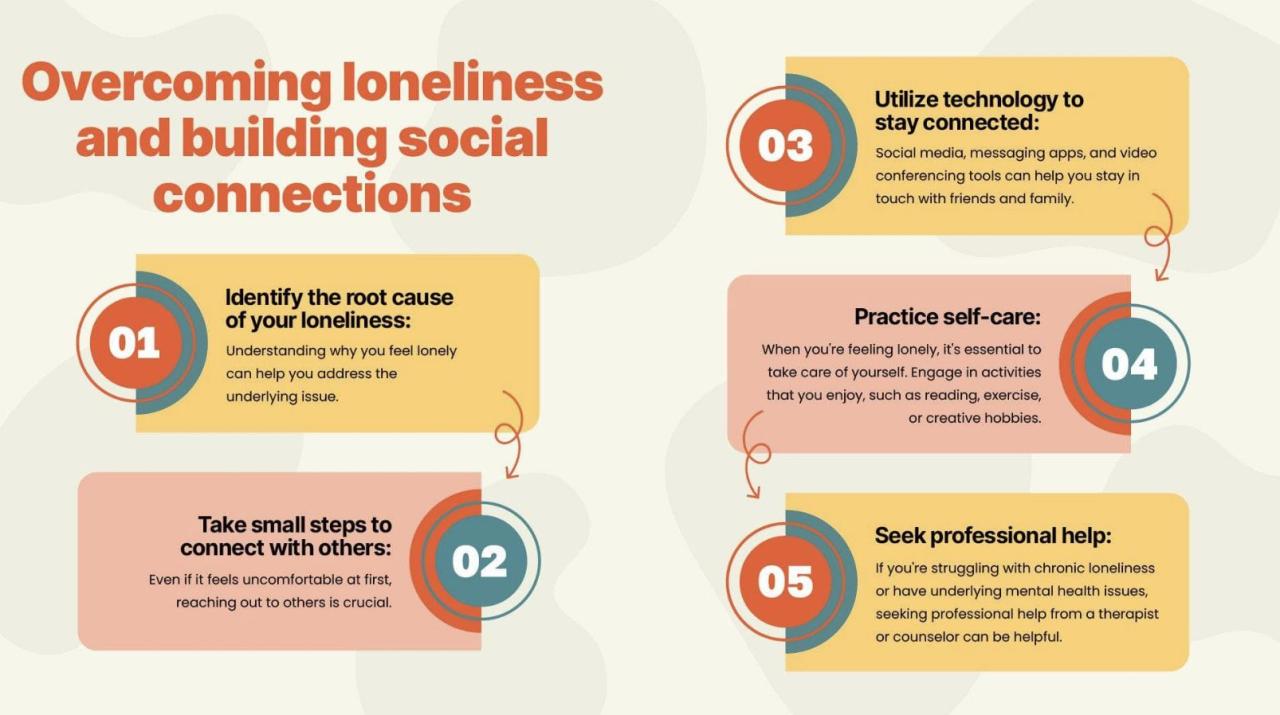
C. Individual and Relationship Strategies: The Power of One
Individuals also have significant agency in building their social health. Evidence shows that our own actions and mindsets play a crucial role:
-
Psychological Interventions: A meta-analysis of 280 studies found that while all interventions helped, psychological therapies like Cognitive Behavioral Therapy (CBT) showed the strongest effects in reducing loneliness. CBT can help individuals address negative thought patterns, such as the assumption of rejection, and replace them with more balanced interpretations. This can reduce social anxiety and avoidance, making it easier to build and maintain relationships.
-
Everyday Actions: Small, consistent efforts can build meaningful connections over time. The WHO and other public health bodies recommend:
-
Reach out: Make a conscious effort to connect with a friend, family member, or neighbor. A simple phone call or a text can make a world of difference.
-
Be present: Put away phones and other distractions during in-person interactions to be fully present in conversations.
-
Cultivate a positive social outlook: Make social connection a lifelong priority and view new relationships with a positive mindset.
-
Join a group: Whether it’s a book club, a sports team, or a volunteer group, joining a group with shared interests is a powerful way to build a social network.
-
Say hello: Start small. Greeting a neighbor or striking up a brief conversation with a familiar face at the grocery store can be a first step toward a new connection.
-
-
Using Technology Wisely: Digital tools should be seen as a supplement, not a replacement, for in-person interaction. While they are useful for maintaining long-distance relationships and finding community, they should be used mindfully to avoid excessive screen time and the negative impacts of social comparison.
Conclusion: Social Health as a Human Right
The loneliness epidemic is a defining challenge of our time. It is an invisible crisis that affects individuals, communities, and nations, carrying a heavy toll on health, prosperity, and social cohesion. However, the growing body of evidence, spearheaded by the WHO and other global bodies, provides not just a diagnosis but a clear roadmap for a solution.
Social health is not a luxury; it is a fundamental human need and a cornerstone of public health. By shifting our perspective to treat social connection as a serious public health priority, we can build healthier, more resilient societies. The solutions are clear: from individual acts of kindness and cognitive behavioral therapy to national policies that invest in social infrastructure and intergenerational programs.
The fight against loneliness is a collective responsibility. It requires a concerted effort from governments to prioritize social health, from communities to foster inclusive environments, and from individuals to make human connection a meaningful part of their daily lives. The benefits are far-reaching: longer, healthier lives, stronger communities, and a more prosperous world. The time for action is now. Every day delayed is a day of unnecessary suffering and preventable death.